Tenant Damage to Property: How Landlords Prevent It and Recover the Costs
Tenant damage to property is one of the most expensive problems in the rental business — and one of the most preventable. Most serious damage traces back to a tenant who should never have been approved, a lease agreement that never defined tenant responsibilities, or a missing paper trail when the dispute finally arrives. Equipped reduces property damage at the source: screen tenants properly, document the property's condition, and keep every repair and communication on record in one app.
- Screen out high-risk applicants before they get the keys
- Documented condition reports, photos, and repair costs per rental property
- A clean record for security deposit deductions or legal action


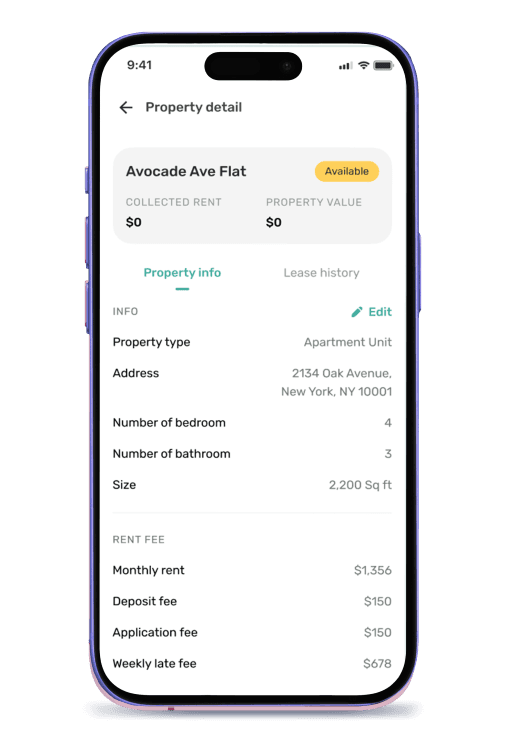

How Tenant Damage to Property Actually Happens
When landlords trace tenant caused damage — broken windows, large holes in walls, ruined carpet, broken appliances, and neglect that turns minor problems into expensive repairs — back to its source, the same patterns show up again and again. The first pattern is screening that never happened. A tenant with a history of property damage, disputes with previous landlords, or evictions tends to repeat that history. A tenant screening process with background checks, credit checks, and calls to previous landlords surfaces those signals before the lease is signed — which is why reducing property damage starts at the application, not at move-out.
The second pattern is a lease agreement that never set expectations. When lease terms do not define tenant responsibilities, property maintenance duties, guest rules, and what counts as damage versus normal wear and tear, every dispute becomes an argument. Wear and tear refers to expected deterioration from normal use — faded paint, minor scuffs, carpet worn in high traffic areas — and a landlord cannot deduct it from the security deposit. Tenant caused property damage from misuse, negligence, or abuse is chargeable. Clear definitions in the rental agreement give both you and the tenant the same rulebook from day one.
The third pattern is missing documentation. Without a move-in condition report, dated pictures, and routine property inspections, a landlord cannot prove the damage was tenant caused — and without proof, deducting repair costs from the tenant's security deposit becomes a dispute you can lose. The property owner with photos, repair invoices, and an itemized list wins arguments the property owner with memories loses.
Benefits of Reducing Tenant Damage With Equipped
Fewer Incidents Start With Tenant Screening
Past behavior predicts future behavior. Background checks, credit checks, eviction history, and previous landlords' references reveal how an applicant treated their last rental unit. In Equipped, the tenant screening process runs inside the same app as onboarding, so the applicant you verify is the tenant you sign — and the highest-risk applicants never get the keys.
Know Where Normal Wear and Tear Ends
A signed move-in condition report with dated pictures draws the line between normal wear and tear and tenant caused damage before anyone argues about it. When the tenant moves out, you compare condition to condition — the critical distinction between expected deterioration and chargeable damage stops being a matter of opinion.
Repairs Caught While They Are Small
Tenants report maintenance issues from their phone, requests become work orders, and repair costs log against the rental property. Regular property inspections — with proper notice per your local laws — catch minor problems before they become significant property damage. A small leak found in month three costs a washer; found at move-out, it costs a floor.
A Deposit Deduction Record That Holds Up
Most states require an itemized list of deductions with receipts, sent within a deadline after the tenant vacates. If repair costs exceed the security deposit amount, small claims court or a claim on your landlord insurance policy covers the balance — and every path depends on evidence. Equipped keeps the lease, photos, inspections, and repair invoices in one record, so your legal rights are backed by documentation, not memory.
Handling Tenant Damage Manually vs. With Equipped
Both approaches deal with tenant damages. The difference is whether you prevent most of it and hold evidence for the rest, or discover it at move-out and argue from memory.
| Stage | Manual / paper process | Equipped |
|---|---|---|
| Applicant screening | Gut feel or a one-off report | Documented background and credit checks |
| Move-in condition | Verbal walkthrough, no record | Signed condition report with dated photos |
| Inspections | When you remember | Scheduled, logged with pictures |
| Maintenance issues | Discovered at move-out | Reported early, tracked as work orders |
| Repair costs | Receipts in a shoebox | Logged per rental property |
| Deposit deductions | Disputed from memory | Itemized list backed by evidence |
Who Needs This Most
Every landlord benefits from fewer damage disputes, but for some the stakes make prevention essential.
You Got Burned by a Previous Tenant
If your last move-out cost thousands in repairs you could not recover, the gap was almost always screening or documentation. Fix both before the new tenant signs.
You Manage Multiple Rental Properties
Across a portfolio, damage somewhere is a matter of time. Consistent screening, inspections, and per-property records keep incidents rare and recoverable.
You Self-Manage From a Distance
When you cannot drive by the property, documented inspections and tenant-reported maintenance are your eyes. Equipped keeps both in your pocket.
Your Deposits Keep Disappearing Into Repairs
If every turnover eats the security deposit and more, prevention pays for itself: better tenants, clearer lease terms, and earlier repairs cut the biggest losses.
A Note on Legal Action
Deposit rules, notice requirements, and eviction proceedings are governed by state and local laws, and serious cases deserve legal counsel. Equipped is not a substitute for legal advice — it is the documented record that makes your case defensible.
What To Expect: Reducing Property Damage in Equipped
Screen Before You Sign
Run the tenant screening process — credit checks, background checks, eviction history — inside the app, and approve on documented criteria.
Onboard With a Documented Condition Report
Photograph the rental unit at move-in and store the signed condition report with the lease agreement, all in one place.
Run Regular Property Inspections
Inspect on a schedule with proper notice, and store dated photos so the property's condition is never a matter of opinion.
Catch Repairs While They Are Small
Tenants report issues from their phone; requests become work orders; repairs and repair costs log against the property.
Move Out With Evidence, Not Arguments
Compare move-out condition to move-in, build the itemized list of deductions, and keep the receipts — ready for the deposit statement, small claims court, or an insurance claim.
Why Choose Equipped to Reduce Property Damage
Most property management tools treat screening, inspections, maintenance, and deposits as separate jobs in separate places. Equipped connects them, because that is how damage prevention actually works: the tenant you screen is the tenant you onboard, the condition you document is the condition you compare when the tenant moves out, and the repairs you log are the repair costs you recover. One app, one record per rental property, from application to move-out inspection.
For landlords and property managers, the payoff is fewer incidents and better outcomes when they happen: tenants selected on evidence, expectations set in writing in the lease agreement, minor problems fixed before they spread, and a paper trail that stands up when money is on the line — whether that is a security deposit deduction, an insurance claim, or a small claims court filing. That is how a property owner protects the investment without turning into a full-time property manager.
About Equipped
Reducing property damage is part of tenant screening & onboarding and works hand in hand with maintenance & work orders. Equipped is a rental property management software company headquartered in Alpharetta, Georgia. The Equipped app is a mobile rental property assistant for iOS and Android that centralizes tenant screening, onboarding, rent collection, maintenance, and property records in one place. Property owners and landlords across the United States use Equipped to find reliable tenants, document their rental properties, and keep the records that protect them. Download the Equipped app to get started.
Frequently Asked Questions
Protect your rental property before the damage happens
Download the Equipped app on the Apple App Store or Google Play.